About
Anugrah Mishra
London, United Kingdom

Anugrah Mishra is a London-based contemporary painter whose work explores migration, displacement and the psychological realities of people affected by conflict, exile and forced movement. Rather than document the refugee crisis, his paintings approach it through a psychological lens — recurring motifs of interiors, liminal spaces, abandoned rooms and birds function as metaphors for memory and fractured identity, drawing on atmosphere, silence, domestic objects and archetypal references from psychoanalysis, the Ramayana and the Mahabharata.
“Painting offers something that film cannot: stillness. It resists the momentum of the narrative and compels the viewer to linger.”
A Life in Painting
Age 8
Paints a portrait of Lord Hanuman in India — his first significant artwork.
Age 16
Decides to pursue art professionally, studying classical masters (Ravi Varma, da Vinci, Rembrandt) alongside Van Gogh and Picasso.
Mumbai
Completes a foundation course in Fine Art at NJ School of Art.
Cambridge
Relocates to the UK during the pandemic to study BA (Hons) Fine Art at Cambridge School of Art, Anglia Ruskin University, under mentors including Probir Ghosh and Benet Spencer.
2024
Wins the Freelands Painting Prize 2024, exhibiting at Freelands Foundation, London.
2025–26
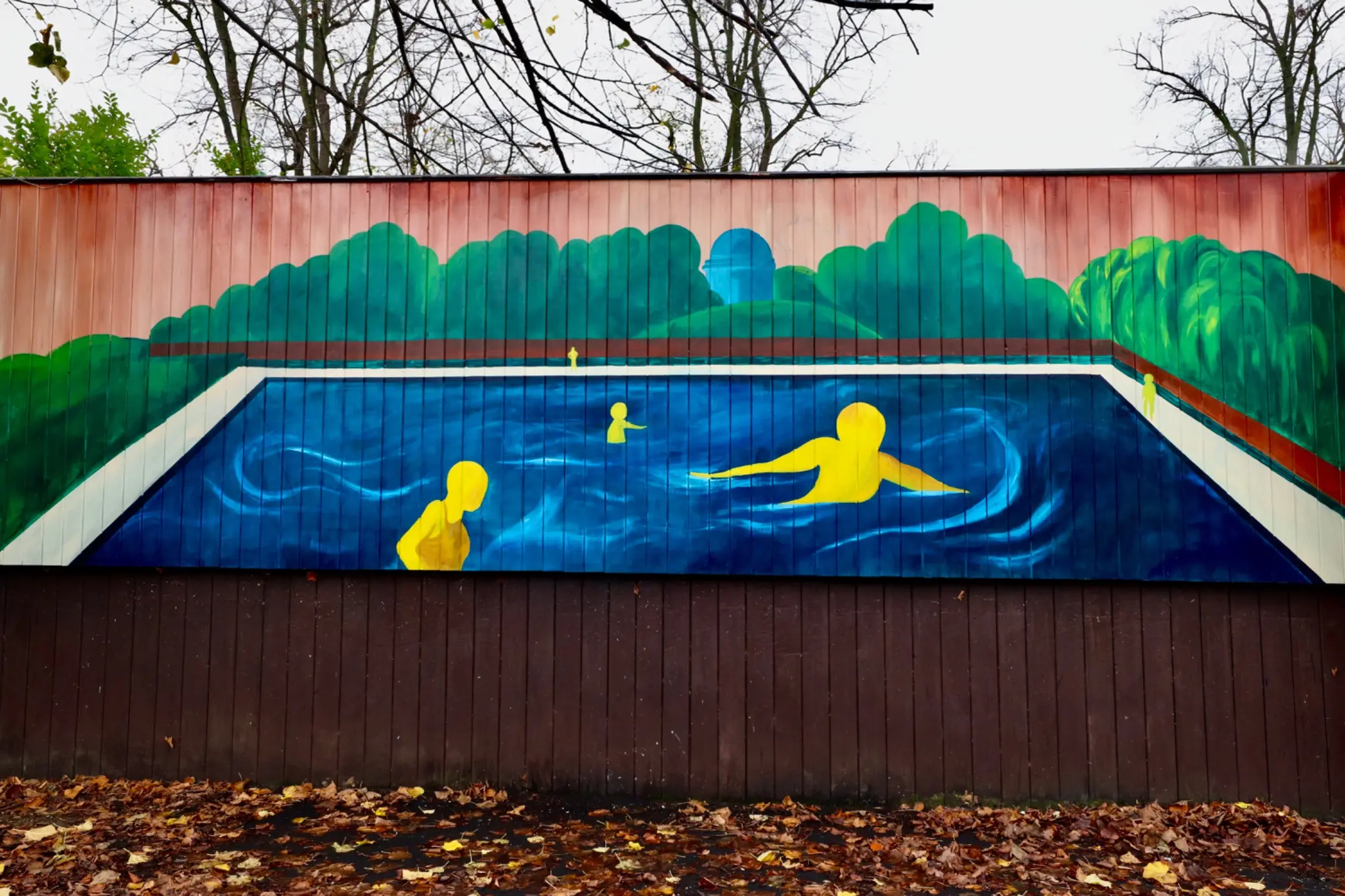
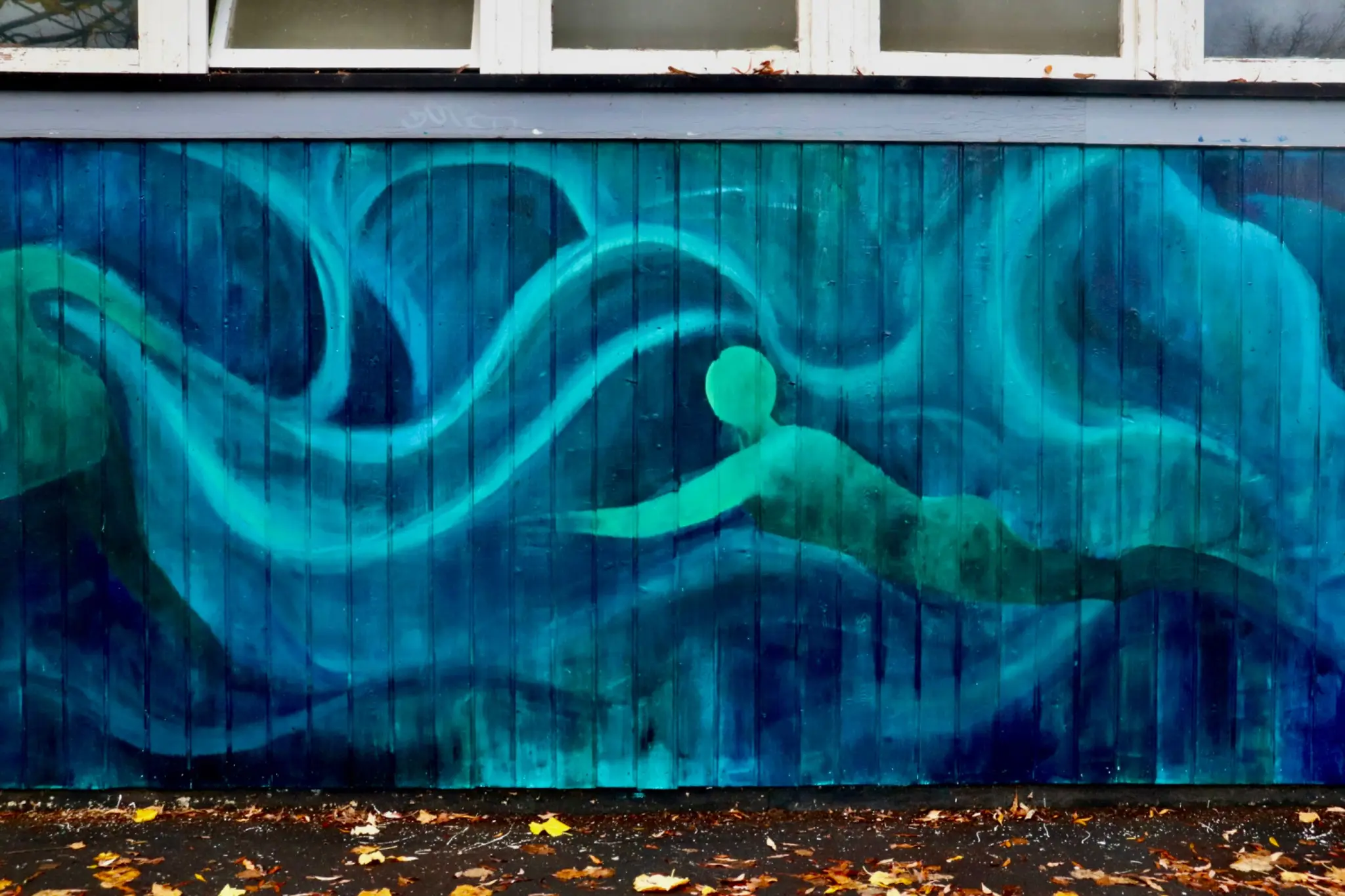
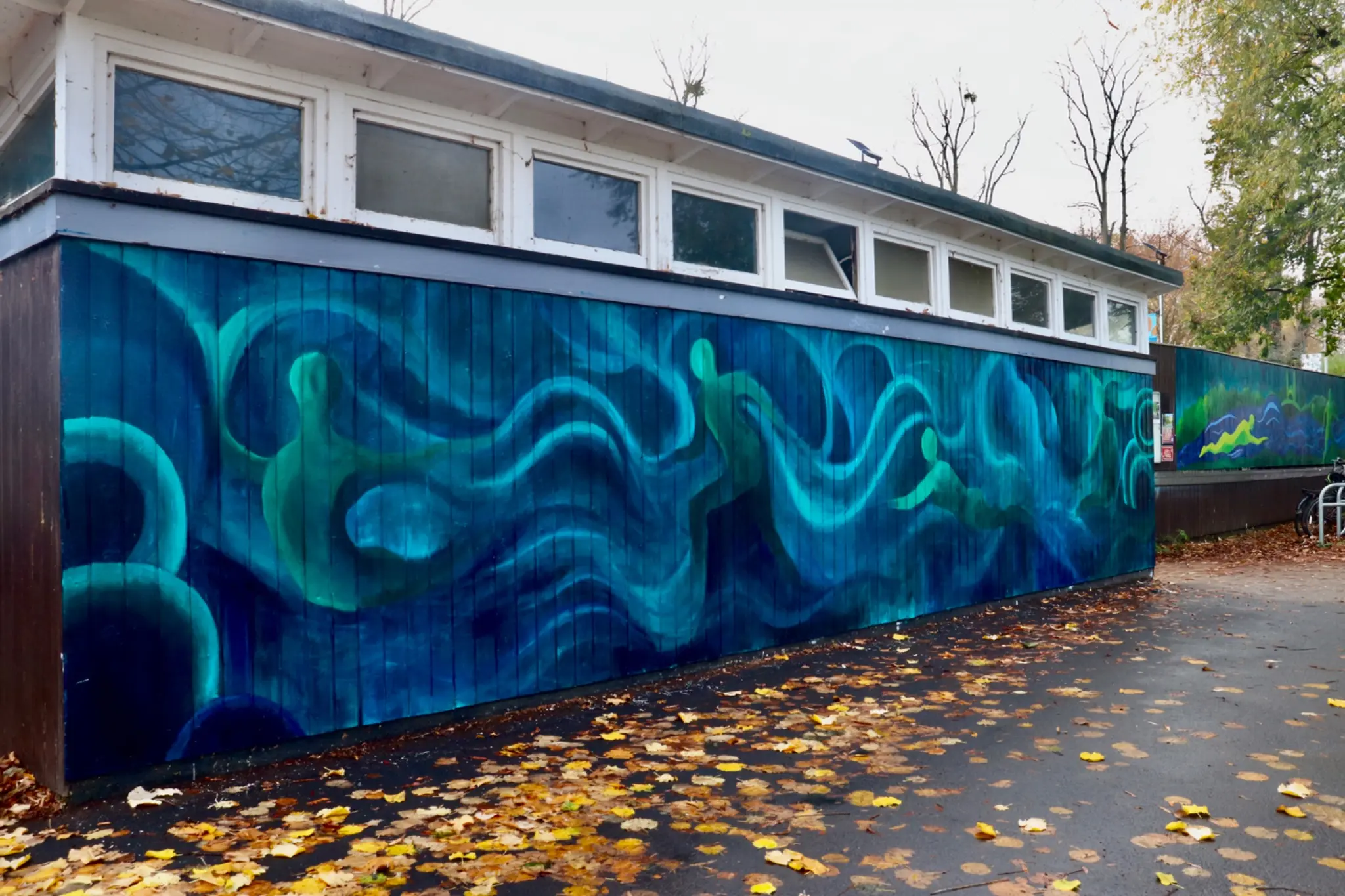
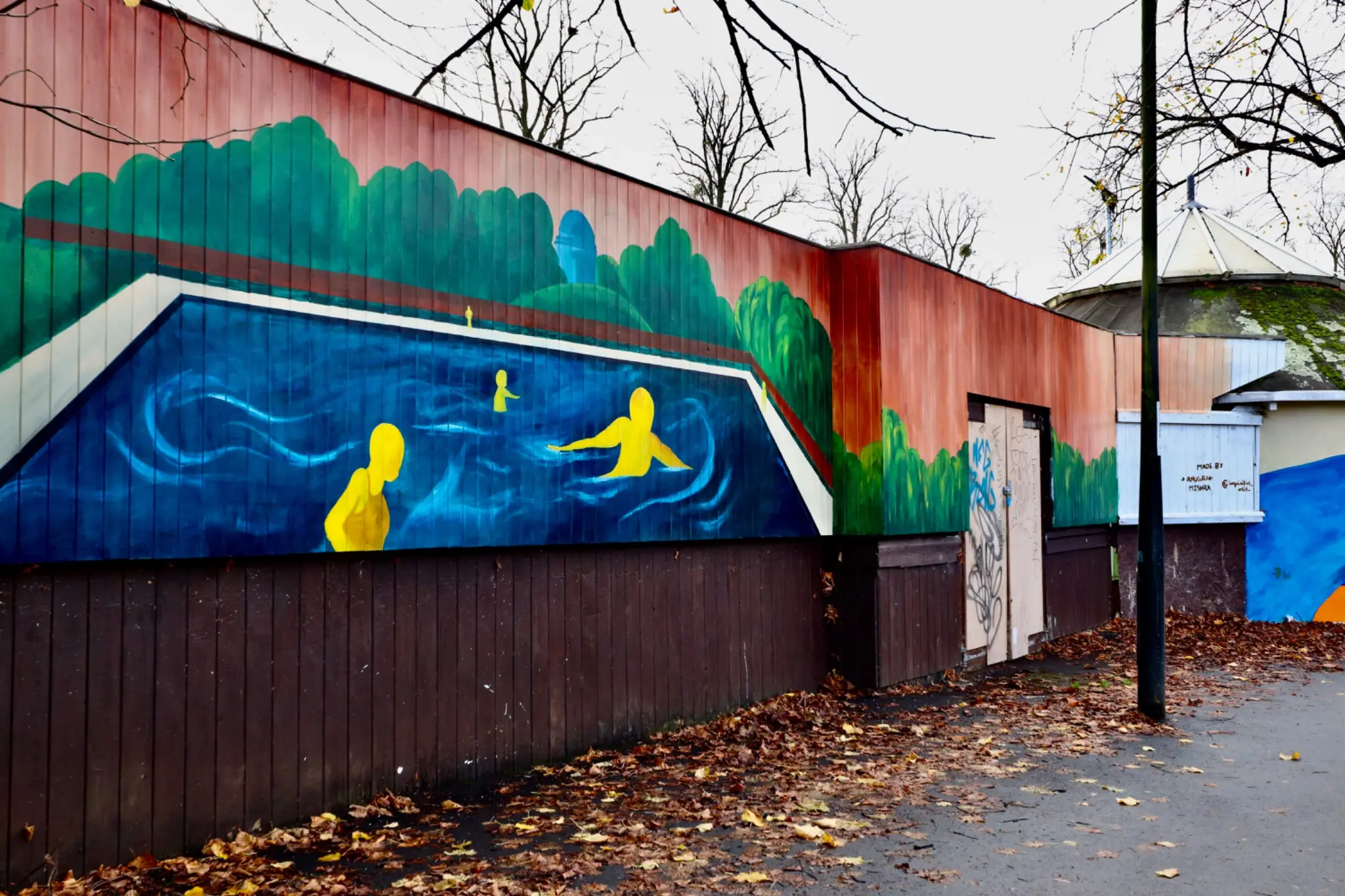
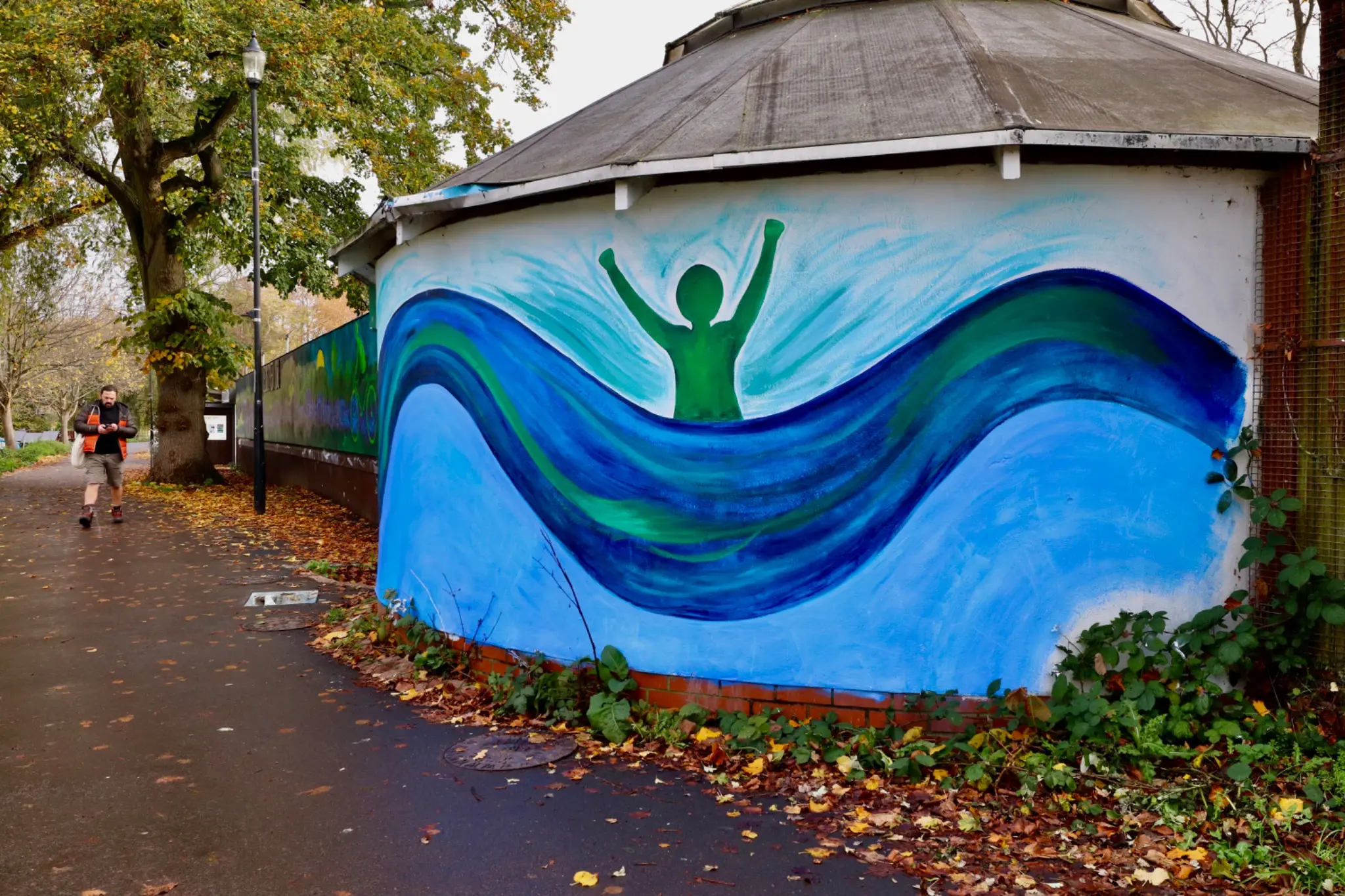
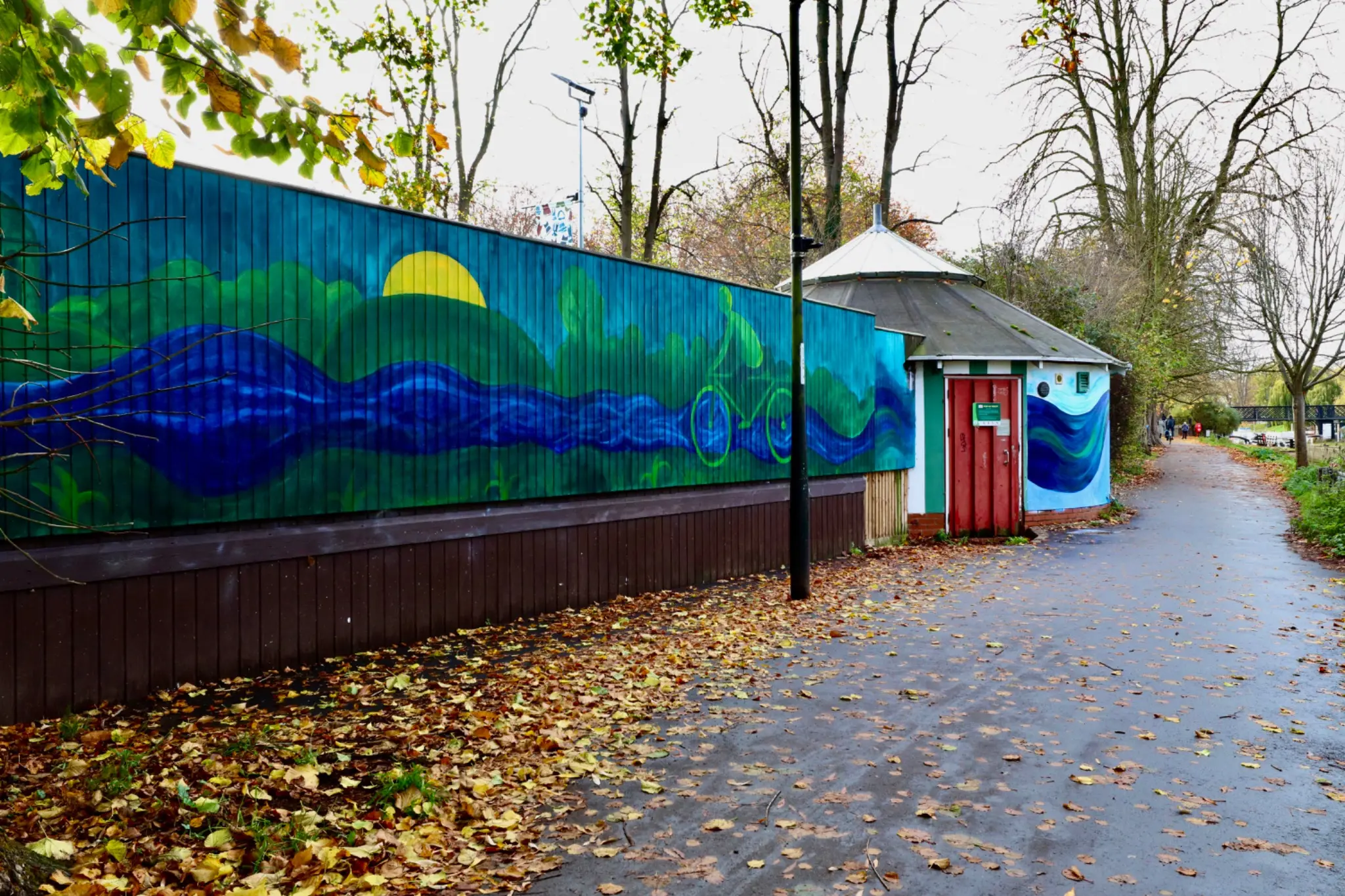
Completes “The Human Current,” a 120 square-metre public mural at Jesus Green Lido, commissioned by Cambridge City Council.
Public Art
The Human Current
2025 · 120 square metres · Jesus Green Lido, Cambridge
Commissioned by Cambridge City Council
Painted across wooden fencing and curved architectural surfaces along the lido's path, The Human Current responds to the site's relationship with water, movement and communal life. Abstracted human figures move through layered bands of blue and green, referencing both the River Cam and the experience of outdoor swimming — simplified figures acting as shared symbols of motion, wellbeing and collective presence rather than individual portraits. The commission began with Jesus Green Lido assistant manager Annabel Wright, who was looking for a positive response to persistent graffiti on the pathway walls, and, after researching artists, connected with Anugrah — who had studied at Anglia Ruskin University nearby.
“The work is designed to be encountered in passing by walkers, cyclists and swimmers, unfolding gradually along the length of the site.”